Car care resources
What Your Check Engine Light Is Trying to Tell You
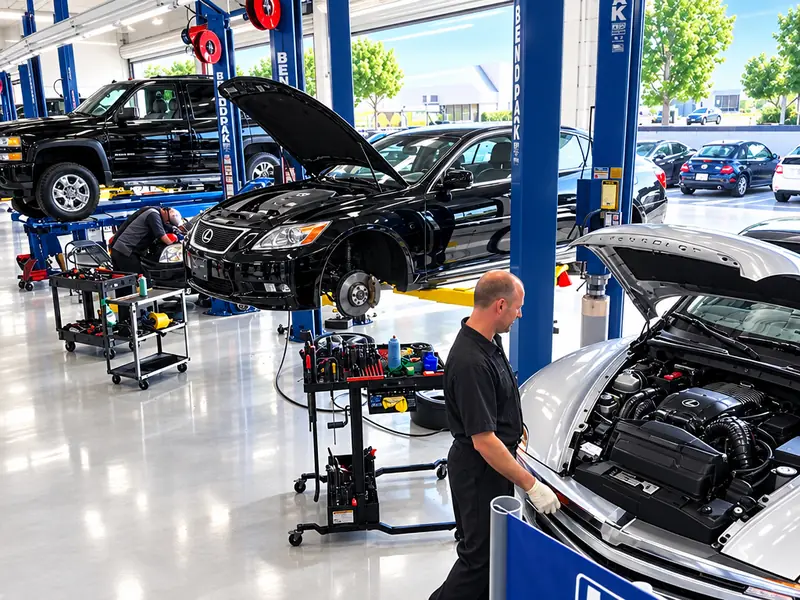
The check engine light (sometimes called the malfunction indicator lamp) comes on when your car's computer sees a reading outside the range it expects from the engine, emissions or transmission systems. It's a heads-up, not a diagnosis.
Steady light vs. flashing light
Steady: something needs attention, but it's usually not an emergency. Schedule a check soon. Flashing: the engine is typically misfiring badly enough to damage the catalytic converter. Reduce speed, avoid hard acceleration and get the car checked as soon as you safely can.
Common causes
- A loose or worn gas cap (evaporative emissions leak)
- Oxygen sensor or air-fuel ratio sensor faults
- Ignition problems: spark plugs or ignition coils causing misfires
- Mass airflow sensor problems or vacuum leaks
- Catalytic converter efficiency codes
- Thermostat or coolant temperature sensor issues
Why "free code reading" isn't a diagnosis
A code tells you which system reported a problem, not which part failed. A misfire code, for example, could be a plug, a coil, an injector, a vacuum leak or low compression. Replacing parts based on the code alone often wastes money. A proper diagnosis tests the system so the repair fixes the cause.
Is it safe to drive?
With a steady light and a car that drives normally, usually yes, for a short while. If the light is flashing, the car runs poorly, the temperature gauge is high or you see an oil pressure warning, stop and call for advice.
What to tell your mechanic
When did it come on? Was it after fueling? Does the car feel different? Has any recent work been done? Those details make diagnosis faster.
Need it checked in Huntington Beach? See our check engine light diagnostics page or call (714) 962-2400.
This article is general information, not a diagnosis of your vehicle. Always follow your owner’s manual and get symptoms checked in person.